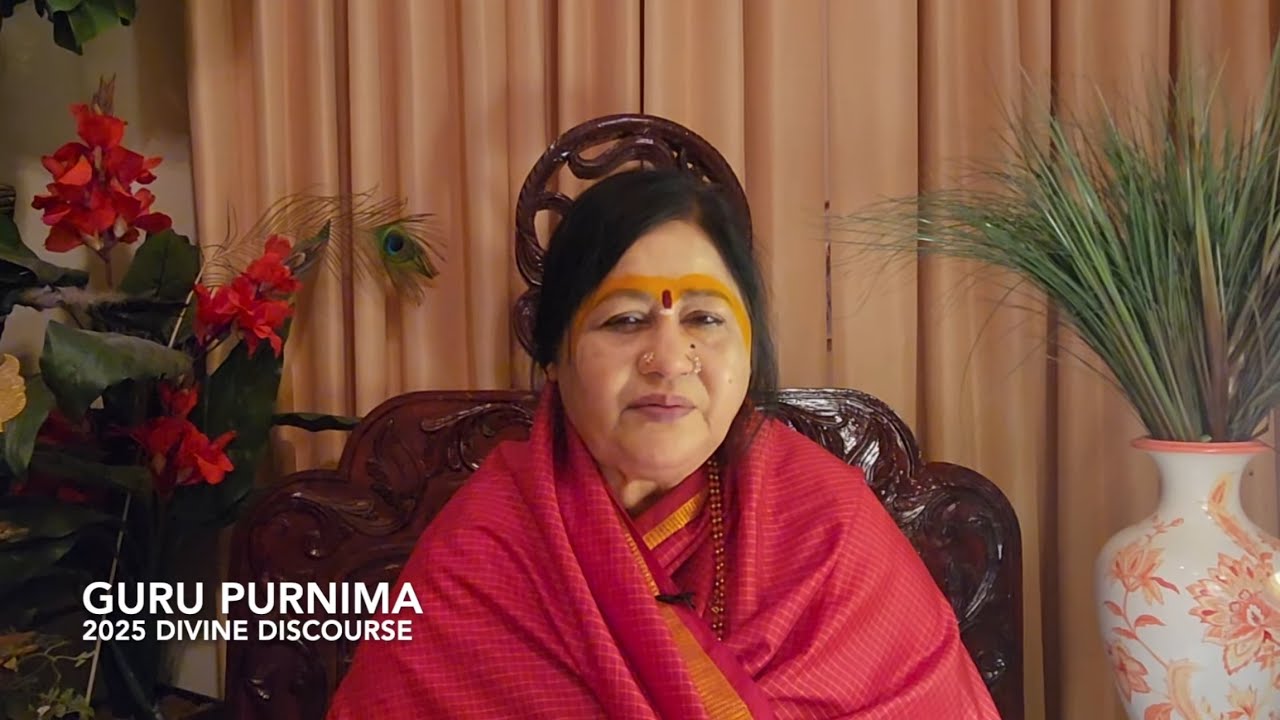
Sri Karunamayi delivers a detailed discourse on Sri Lalita Sahasranama—the thousand sacred names of the Divine Mother—explaining its metaphysical significance, the power of mantra recitation, the relationship between the names and consciousness, and the tangible spiritual benefits available to sincere practitioners. The talk emphasizes that chanting these names with understanding and devotion purifies the heart, elevates consciousness, and creates a direct link to divine grace.
What Is Sri Lalita Sahasranama and Why Does It Matter?
Sri Lalita Sahasranama is a foundational text in Hindu and Tantric philosophy, consisting of one thousand names of the Divine Mother, also known as Lalita Devi, Rajrajeshwari (the Queen of Queens), and the Supreme Shakti. According to Sri Karunamayi's teaching, these are not merely poetic descriptions but encoded spiritual frequencies—each name carries a specific vibration and consciousness that aligns the practitioner with divine attributes.
The "Sahasranama" (thousand names) structure itself reflects a profound cosmological principle: the infinite nature of the Divine Mother cannot be captured in a single name or form, yet through one thousand names, the text provides multiple doorways into understanding and experiencing her nature. Sri Karunamayi explains that in Hindu philosophy, particularly in texts like the Devi Bhagavata, the Divine Mother is understood as Jagat Janani—the Mother of the Universe—whose creative force sustains all existence.
This practice is not confined to intellectual study. The recitation of these names is understood as a living technology for spiritual transformation, accessible to anyone regardless of their level of prior spiritual development.
How Do Mantras and Sacred Names Work on Consciousness?
Sri Karunamayi describes the mechanism of mantra practice with precision: each name in the Sahasranama functions as a seed-syllable (bija akshara) carrying concentrated spiritual energy. When chanted with awareness, these syllables create vibrational patterns that resonate not only in the physical body but in the subtle energy body—the system of chakras, nadis (energy channels), and the kundalini shakti (the coiled cosmic force at the base of the spine).
The practice works on multiple levels:
- Purification of mind: Continuous chanting steadies the mind's attention, reducing the pull of distraction and ego-identification. The repetition creates a "groove" in consciousness that becomes easier to access with practice.
- Activation of chakras: Different names correspond to different energy centers. As you chant, these centers are awakened and harmonized, opening pathways for kundalini awakening and higher states of awareness.
- Alignment with divine will: By repeating names that embody compassion, wisdom, power, and grace, the practitioner gradually aligns their own nature with these divine qualities.
- Direct connection to the Divine Mother: Sri Karunamayi emphasizes that the Mother hears her own names and responds with grace. There is no intermediary—the sincere chanter receives direct blessings.
Importantly, Sri Karunamayi stresses that the power of the names is not limited by one's prior spiritual attainment. Whether someone is a complete beginner or an advanced practitioner, the mantra works according to the sincerity and understanding brought to the practice.
What Are the Specific Benefits of Chanting Lalita Sahasranama?
Sri Karunamayi outlines several transformative benefits that arise from regular, devoted practice:
- Purification of the heart and mind: As the names penetrate consciousness, mental impurities—anger, greed, attachment, aversion—begin to dissolve. The heart becomes receptive to grace.
- Protection from karmic consequences: The text itself promises that even grave sins can be mitigated through sincere recitation. This is not because the names magically erase karma, but because the practice elevates consciousness to a state where past karmic patterns lose their grip.
- Material and spiritual prosperity: Sri Karunamayi explains that the Mother, through these names, is the giver of all abundance. Those who worship her with sincere heart receive both material blessings (when needed for spiritual growth) and spiritual attainments.
- Mental clarity and wisdom: The sustained focus on divine names develops buddhi (discriminative intelligence), allowing the practitioner to see through illusion and understand their true nature.
- Freedom from fear: Many of the names invoke the Mother's protective power (Durga, Bhavani). Through chanting, the practitioner internalizes this protection and is freed from existential fear.
- Rapid spiritual evolution: Sri Karunamayi notes that in comparison to other spiritual practices, the directness of mantra recitation accelerates inner transformation, sometimes producing tangible results within weeks or months of consistent practice.
How Should One Chant the Sahasranama for Best Results?
Sri Karunamayi provides practical guidance on how to approach this practice with maximum effectiveness. The quality of your chanting matters far more than the quantity or speed:
- Understand the meaning: Before chanting a name, understand what it means and what divine attribute it represents. This creates a mental anchor and prevents the practice from becoming mechanical repetition.
- Cultivate bhakti (devotion): The Mother responds not to perfect pronunciation but to sincere feeling. Chant with your heart, with longing, with gratitude—not as a transaction but as an offering.
- Choose a consistent time and place: Establish a sacred space and time for your practice. Even 10-15 minutes of daily chanting is far more powerful than sporadic longer sessions.
- Maintain purity of intention: Do not chant for selfish purposes alone. While the Mother certainly grants worldly blessings, she especially responds to those who seek spiritual liberation and the good of all beings.
- Use a mala (prayer beads): Counting the names with a mala keeps the mind engaged and creates a container for your practice. Each bead is a tangible anchor to keep attention steady.
- Combine with meditation: After chanting, sit in silence and allow the vibrations to settle. This integration period is where the deepest transformations occur.
Sri Karunamayi emphasizes that you need not master all one thousand names at once. Many practitioners begin with a few key names or a shorter version, allowing deep familiarity to develop before expanding the practice.
How Does the Divine Mother Manifest Through These Names?
A central teaching in Sri Karunamayi's discourse is that the Divine Mother is not a distant deity requiring elaborate ritual. She is the living consciousness pervading all existence. The names are her way of revealing different facets of her nature:
- Rajrajeshwari: The Queen of Queens, the supreme sovereign—teaching that all authority and power ultimately derive from divine grace.
- Jagat Janani: The Mother of the Universe—reminding us that the entire cosmos is her living body, that we are never separate from her.
- Chidrupini: Consciousness itself in manifest form—pointing to the non-dual truth that the Mother is not other than our own deepest Self.
- Durga and Bhavani: The fierce protective forms—teaching that the Mother will destroy all obstacles to our spiritual liberation, both external and internal.
Each name is both a description of the Mother and an invitation to experience that aspect of divinity within yourself. By chanting her names, you are not worshipping someone external—you are awakening that divine nature within your own consciousness.
What Is the Relationship Between the Names and Your Spiritual Destiny?
Sri Karunamayi touches on a subtle but profound teaching: the fact that you are drawn to the Sahasranama at all is itself evidence of the Mother's grace. She draws those toward herself who are ripe for spiritual evolution. The act of chanting these names is both a practice and a response to a calling you may not fully understand with your rational mind.
The teaching implies that repeated birth into human form, suffering, and spiritual seeking are all the Mother's way of shepherding individual consciousness back to its source. The Sahasranama is one of her most direct vehicles for this homecoming.
Where to Go From Here
If you are drawn to this practice, Sri Karunamayi's guidance is to begin where you are. You need not wait for perfect conditions or complete understanding. Start with even one name—chant it with sincerity, feel your way into its meaning, and allow the Mother to guide you. Many spiritual seekers have found that a consistent, humble practice of the Sahasranama opens doors to experiences of grace, clarity, and peace that no amount of intellectual study alone can provide.
A practical first step: choose one name each day, learn its meaning, chant it for 10-15 minutes with a mala, and sit in silence afterward. Over time, as familiarity deepens, expand to more names or the complete text. The Mother meets you exactly where you are—your sincere effort is all that is required.