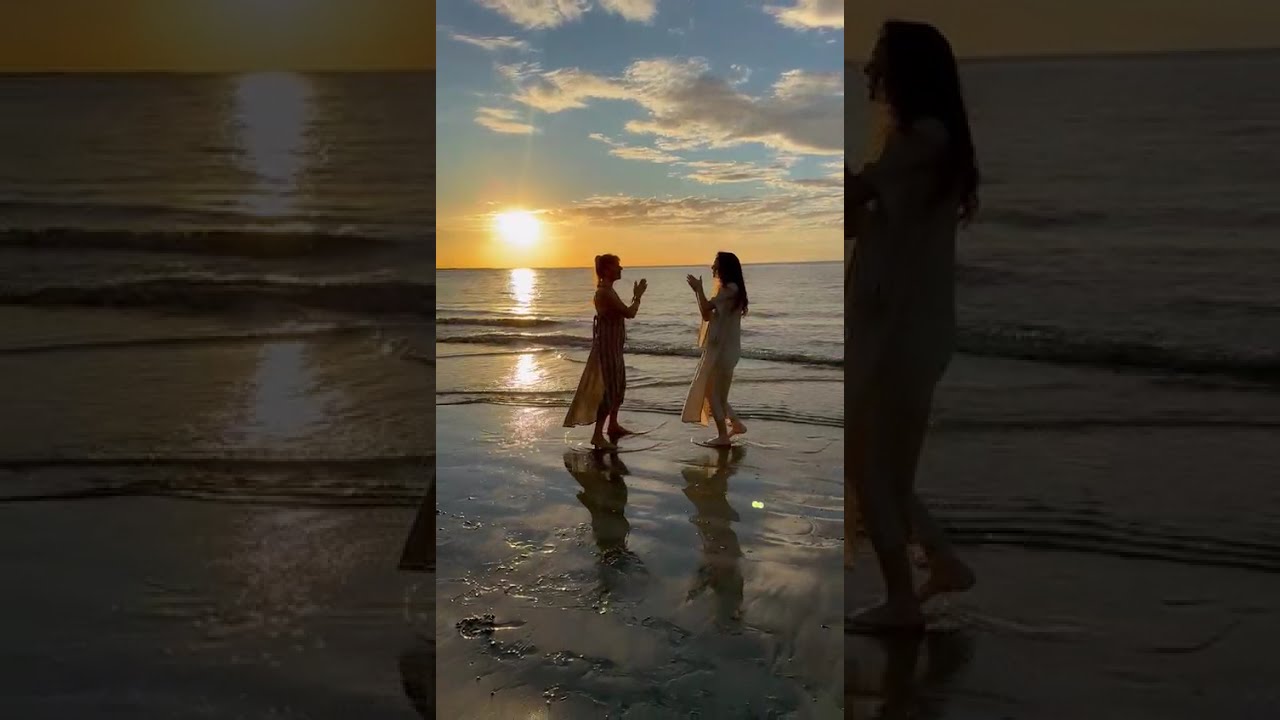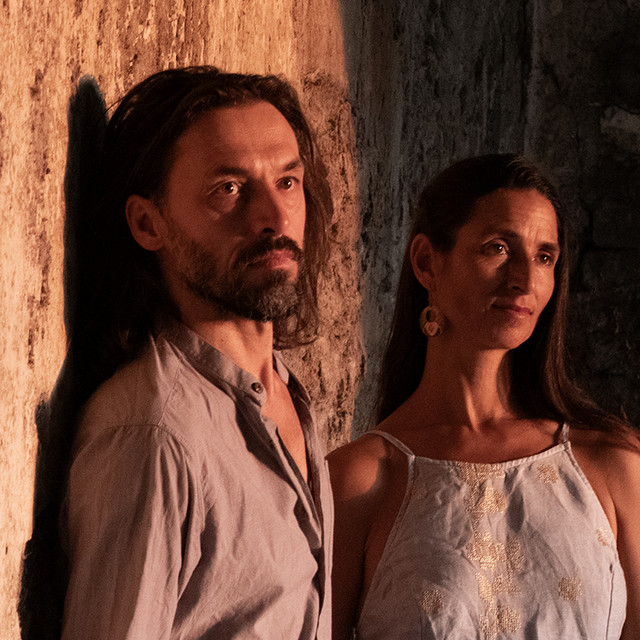
"Even as Night" is a devotional kirtan chant by Mirabai Ceiba performed with Jamshied Sharifi at Spirit Fest 2010. The piece weaves together the cyclical imagery of night and darkness with themes of birth, death, and awakening. Rather than viewing night or death as endpoints, the chant frames them as natural turns in an eternal wheel—moments where breath becomes the anchor for consciousness and awakening. The refrain "may you awake past day past death" invokes a spiritual consciousness that persists beyond temporal and mortal boundaries. The performance culminates in collective affirmation: "one sound one breath one love one planet one Spirit"—emphasizing that individual practice dissolves into shared resonance.
What is the Structure of "Even as Night"?
The chant follows a call-and-response pattern rooted in traditional kirtan structure. The main melodic thread repeats throughout: "Even this night darkens the earth / the wheel turns and turns / death follows birth / strive as you sleep with every breath / may you awake past day past death." This repetition is not redundant; rather, it mirrors the cyclical cosmology embedded in the lyrics themselves. The wheel that "turns and turns" is not merely metaphorical—it is enacted in the musical form itself, where each iteration deepens the listener's embodied understanding of recurrence and return.
The opening invocation sets the tone: "Even this night darkens the earth." Night here is not fearful or terminal but accepted, even embraced. The natural darkening of each day becomes the container for spiritual practice. This acceptance of darkness—whether literal or metaphorical—allows the chanter to reframe struggle and sleep not as obstacles but as integral parts of the spiritual path.
How Does Breath Function as a Tool for Awakening?
A recurring line in the chant—"with every breath may you awake"—positions breath as the primary mechanism of spiritual awareness. In yoga and Tantric philosophy, breath (prana) is not merely biological function; it is the vehicle of consciousness itself. By linking awakening to breath, the chant suggests that enlightenment is not a distant goal but something accessible in each inhalation and exhalation.
The instruction to "strive as you sleep" adds a paradoxical dimension: awakening is not achieved through struggle alone but through a kind of conscious surrender that operates even in states of rest or unconsciousness. This mirrors the Taoist principle of wu wei (non-action) and the Bhakti concept of prapatti (surrender). The chanter is invited to relax into the process while remaining attentive—to trust that breath itself carries the work of transformation.
What Cosmological Vision Underlies the Song?
The imagery of "the wheel turns and turns / death follows birth" draws on Hindu and Buddhist conceptions of samsara—the cyclical nature of existence. Birth and death are not isolated events but parts of an eternal turning. The chant does not promise escape from this wheel through a single moment of enlightenment; instead, it suggests that awakening occurs within the wheel itself, moment by moment, breath by breath.
The phrase "may you awake past day past death" extends this vision further. It is not "awakening after death" (a future promise) but awakening that transcends or moves beyond both day and death simultaneously. This suggests a consciousness that is not bound by temporal sequence—a state of awareness that sees through the apparent solidity of waking life and the apparent finality of death. In Advaita Vedanta terms, this points to the non-dual awareness (Brahman) that underlies and pervades all states.
How Does the Performance Create Collective Consciousness?
The performance by Mirabai Ceiba and Jamshied Sharifi demonstrates how kirtan is not a solo or passive listening experience but a participatory practice. The musicians invite the audience into the call-and-response, gradually building a unified vocal texture. This is evident in the closing section where individual voices blend into a collective affirmation: "one sound one breath one love one planet one Spirit Fest."
This move from "even as night darkens the earth" to "one love one planet" represents a journey from personal witnessing of the wheel to collective recognition of shared consciousness. The Sanskrit phrase "Tat Tvam Asi" (Thou Art That)—the fundamental non-dual teaching—becomes lived experience in the moment when hundreds of voices recognize themselves as expressions of a single resonance.
Jamshied Sharifi's instrumental accompaniment plays a crucial role here. The rhythm and harmony create a sonic container that allows each voice to find its place within a larger whole. This is how kirtan functions pedagogically: it teaches non-duality not through intellectual understanding but through direct sensory experience of unity-in-diversity.
Why is Death Embraced Rather than Feared?
A central strength of this chant is its refusal to deny or transcend death. Instead of singing about escaping the cycle or reaching a permanent heaven, the chant repeatedly acknowledges that "death follows birth"—as if to normalize and integrate death into the fabric of spiritual practice. This aligns with Tantric philosophy, which views all experiences (including dissolution and darkness) as expressions of the divine rather than obstacles to divinity.
The teaching here is radical in its simplicity: you do not need to wait until after death to awaken. You do not need to retreat from the world to transcend it. Instead, within the very turning of the wheel—the endless sequence of births and deaths, days and nights, sleeping and waking—awakening is always available. This is what Zen Buddhism calls "the gateless gate": the liberation that was never locked away in the first place.
Where to Go From Here
If "Even as Night" resonates with you, consider exploring the album "A Hundred Blessings" from which this piece is drawn. The practice of kirtan itself—whether through listening or active participation in group chanting—offers a direct pathway into the consciousness this chant describes. The breath-work and repetition train the nervous system to recognize that awakening is not a future achievement but a present capacity.
You might also study the philosophical roots of the chant's imagery by reading about Hindu and Buddhist cosmologies, particularly the concept of samsara and the role of breath (prana) in Tantric philosophy. Teachers in the Bhakti, Advaita, and Kashmir Shaivism traditions all offer complementary perspectives on how individual consciousness participates in larger cycles without being diminished by them.
Finally, the invitation at the heart of this chant—to awaken with every breath—is not mystical poetry but a practical invitation. The next time you pause and notice your breath, you are already engaging the practice that "Even as Night" teaches. The wheel turns. The night darkens. And in that very moment, you may awake.