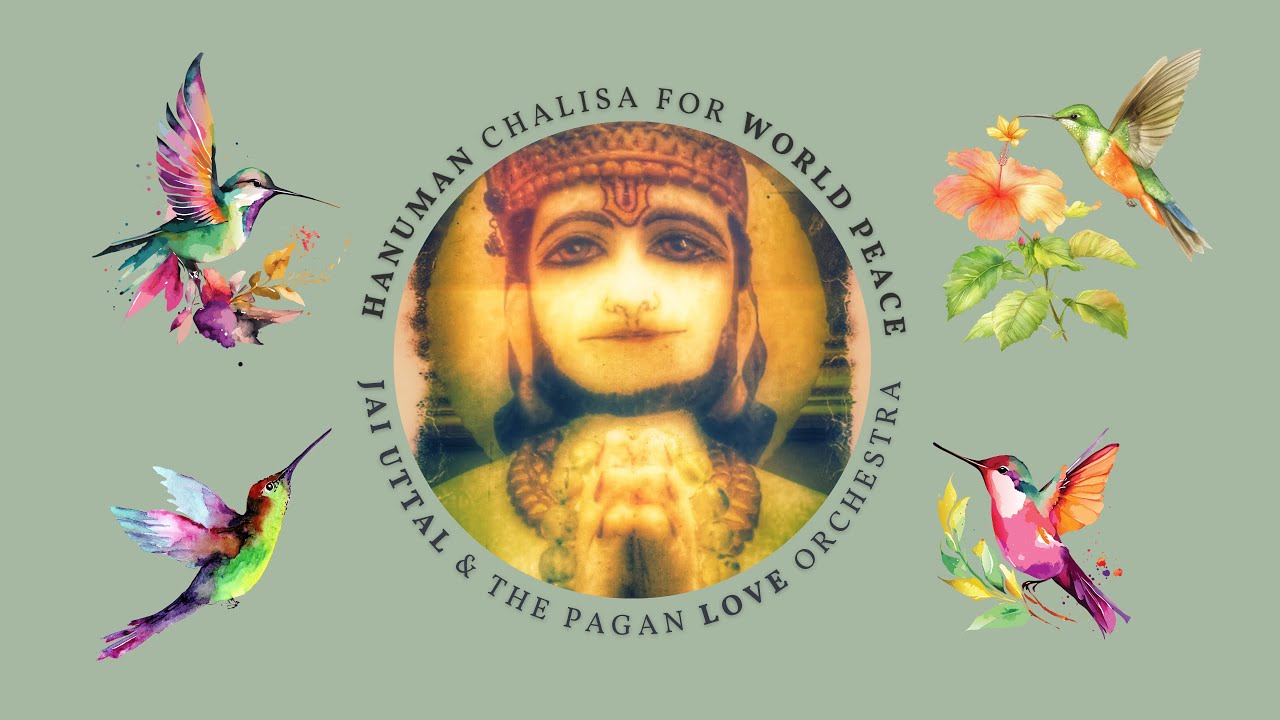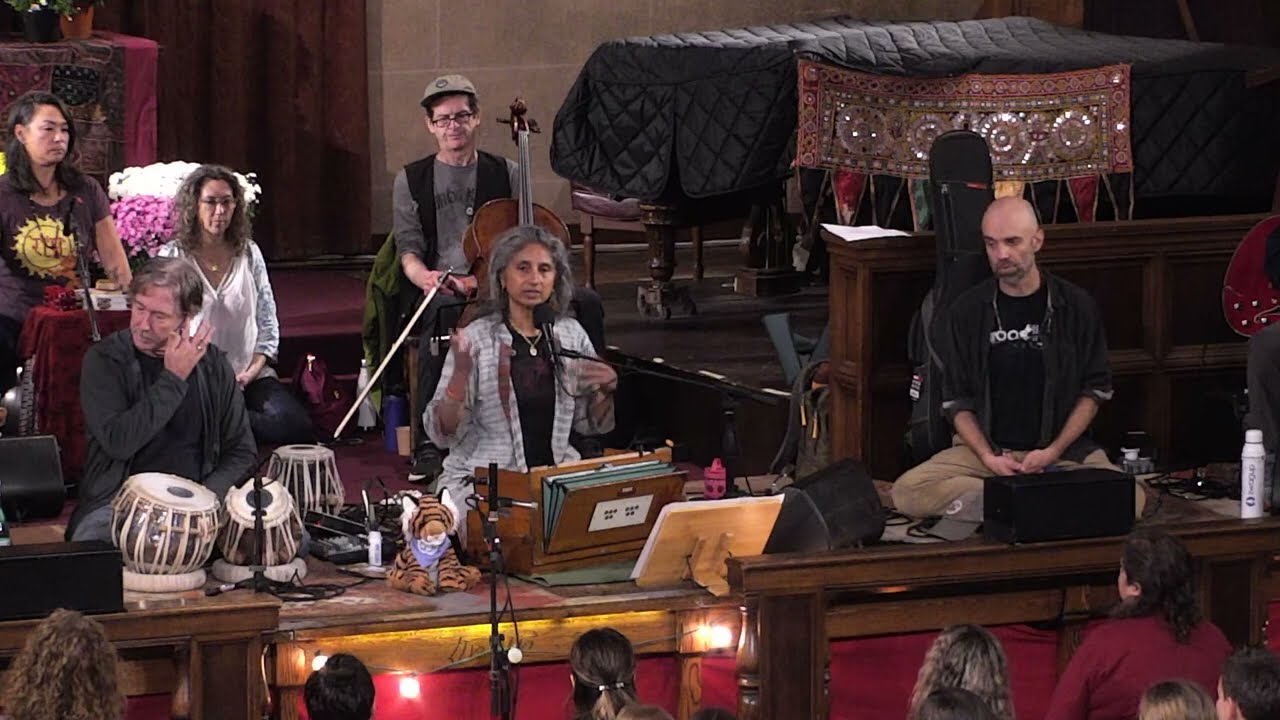
Jai Uttal performs an intimate acoustic practice version of "Bom Bholenath," a devotional kirtan chant that became widely known through his album Mondo Rama and dynamic performances with the Pagan Love Orchestra. The song invokes Shiva (Bholenath), offering a gateway into call-and-response devotional singing rooted in Hindu and yogic tradition.
What is "Bom Bholenath" as a Devotional Practice?
"Bom Bholenath" is a kirtan—a participatory chant common in Hindu, Sikh, and yogic traditions. The name itself carries spiritual weight: "Bholenath" is an epithet for Shiva, the ascetic god of yoga and transformation in Hindu theology. "Bom," a variant of "Om," connects the chant to primordial sound and formless consciousness. By singing the name repeatedly in call-and-response form, practitioners enter into a meditative state that merges devotion (bhakti) with sonic vibration.
Kirtan is not merely music—it is a spiritual technology. The repetition of divine names, set to melody and rhythm, is believed to attune the nervous system, quiet mental chatter, and create what many describe as heart-centered awareness. Uttal's version, rooted in the Mondo Rama album, became recognizable enough that during his planning for an India tour, numerous fans specifically requested he perform it at his free concert in Rishikesh, one of the world's primary yoga and meditation centers.
Why Did This Version Become Notable in India?
Jai Uttal's rendition of "Bom Bholenath" achieved unexpected prominence in India itself—the spiritual homeland of these traditions. This speaks to how Western practitioners who have integrated devotional practices with contemporary musical sensibilities can create fresh interpretations that resonate globally. Uttal's background blends Jewish and Hindu spiritual lineages, and his musical training spans jazz, world music, and sacred sound.
The Pagan Love Orchestra—the ensemble Uttal performed with for this track—brought a full, dynamic energy to the chant. The addition of rhythm section, percussion, and harmonic voices transformed the traditional call-and-response format into something that honored the form while making it accessible and celebratory. This approach—neither watering down the spiritual content nor rendering it academic—created something that could travel across cultures and reach listeners who might not have encountered kirtan before.
The fact that Indian audiences and practitioners requested this specific version reflects how global spiritual music has become. India is not a monolith—contemporary practitioners there are also engaging with new interpretations of their own traditions, and Uttal's version apparently struck a chord.
What Does the Acoustic Practice Version Reveal?
By choosing to share an "acoustic, just practicing" version rather than a polished studio recording, Uttal reveals the underlying structure of the chant. Stripped of the Pagan Love Orchestra's full arrangements, the bones of the melody and the mantra become more visible. This approach serves several functions:
- Accessibility: It shows that kirtan is not dependent on elaborate production. The practice itself—the act of singing the divine name—holds the power.
- Authenticity: It reflects how these chants are often sung in temples, ashrams, and home altars: simply, repeatedly, with sincerity rather than perfection.
- Invitation: An acoustic version invites listeners to imagine themselves joining in. The simplicity creates space for participation rather than passive consumption.
- Rekindling:**Uttal describes "relearning" the song, suggesting that even familiar chants require periodic reconnection and renewal for the practitioner.
Where Does This Chant Sit in Contemporary Kirtan Practice?
Kirtan has undergone significant evolution since the late 20th century. Traditional kirtan in India remains rooted in temple and ashram contexts, often using classical Indian instruments and linguistic forms tied to specific regional and sectarian traditions. However, Western adaptation of kirtan—pioneered by figures like Jai Uttal, Krishna Das, and others—has created a hybrid form: it maintains the spiritual intention and call-and-response structure while integrating Western instruments, harmonic sensibilities, and accessibility-focused performance contexts.
"Bom Bholenath" represents this hybrid space. It is not a field recording of a traditional chant; it is a musician's interpretation, informed by deep practice but executed through a contemporary lens. The Mondo Rama album and the Pagan Love Orchestra performances situated this chant within a broader artistic vision that saw devotion and artistry as complementary rather than opposed.
For practitioners, the shift to acoustic also gestures toward what some call "beginner's mind"—the idea that returning to simplicity can deepen engagement even with material one has performed many times before.
The Role of Preparation and Travel in Spiritual Practice
Uttal's framing of this release is notable: he was "packing for a trip to India" and received requests for this song. Rather than dismissing the requests as nostalgia, he took it as an invitation to reconnect with the material. This reflects a principle in many traditions—that preparation itself is practice. By relearning the song, Uttal was not just rehearsing; he was re-entering the relationship with the chant.
The trip to India, where Rishikesh serves as the hub for modern yoga and meditation tourism, also signals how global these lineages have become. A musician from the United States, trained in Jewish and Hindu traditions, travels to India to sing a chant in English to international practitioners. This reflects the fluid, non-territorial nature of contemporary spiritual practice—which is both an opening and a potential erosion of specificity, depending on one's perspective.
Listening as Engagement
The invitation in Uttal's description—"Hope you like it"—is humble and open. Kirtan is not meant to be a passive listening experience in the original context; it is participatory. Even in a recorded or performed setting, the listener is invited to mentally join, to hum along, to let the repetition of the divine name work on their own nervous system and awareness.
For those unfamiliar with kirtan, listening to this acoustic version offers an entry point. The melodic phrase is clear, the rhythm steady, and the repetition hypnotic in the best sense—it can quiet the discursive mind simply through its regularity and devotional intention.
Where to Go From Here
If "Bom Bholenath" resonates, several paths forward are available. First, listen multiple times—kirtan is designed to reveal layers through repetition. Second, consider learning the chant yourself: most kirtan melodies are simple enough to pick up after a few listens, and singing it is a different experience than hearing it. Third, explore Jai Uttal's full album Mondo Rama and other recordings to understand his broader approach to sacred sound and musical interpretation. Fourth, if you have access to a local kirtan group or teacher, attend a session to experience the communal dimension—the call-and-response with others is central to why this practice has survived and thrived for centuries. Finally, research Bholenath/Shiva and devotional practice in Hindu and yoga traditions to deepen understanding of what the chant invokes beyond its sonic qualities.